

If you have been around here for a while, you know I lead something of a double life online.
There are a little over a thousand of you here, where I write about AI and what it is doing to teaching and learning. There are about thirty-one thousand people somewhere else entirely, on my YouTube channel, where I talk about immersive and spatial audio. Two audiences. Two subjects. I keep them apart on purpose.
When the two worlds do touch, it is almost always because of music. I have written here about why I made an AI music video and what I learned doing it. I have written about how Berklee rolled out a generative AI course for musicians, and where I thought they went wrong. Music is the bridge, and generative AI is usually the thing crossing it.
Lately, though, the bridge has gotten crowded with something I did not expect: philosophy. Music producers and musicians I follow for technical reasons have started talking about cultural theory. Adam Neely and Benn Jordan are two very good examples. I now hear Baudrillard’s name more often from people who make music than from people who make curricula.
That should probably embarrass my own field. It does so, at least a little.
One video brought this into focus for me. Venus Theory is a producer and sound designer, known for his sample instruments and for videos on writing music for games. His recent video essay is called The Dystopian Reality of Online Advertising, and most of it is about exactly that. But partway through, he says something remarkable almost in passing.
We are moving, he suggests, from an Information Age into a Synthetic Age.
That line is the reason for the piece you are currently reading. Venus Theory did not stop to define what he meant by Synthetic Age. He moved on. But I could not.
Two very different synthetic ages
Before I borrow the phrase, I owe it some history, because “the Synthetic Age” already had a meaning before Venus Theory reached for the term.
In 2018 the philosopher Christopher J. Preston published a book with that exact title: The Synthetic Age. His subject was the planet. He argued we are leaving the era in which humans merely disturb nature and entering one in which we redesign it at the root, through synthetic biology, gene editing, de-extinction, and climate engineering.
For Preston, “synthetic” meant engineered life and engineered earth. The frightening part was not pollution laid on top of nature. It was our hands reaching into nature’s basic operations and rewriting them.
Venus Theory is pointing at something else. He is not talking about the metabolism of the planet. He is talking about the metabolism of perception, what reaches our eyes and ears and gets accepted as real. In his usage, the Synthetic Age is the moment generative systems stop indexing reality and start manufacturing it.
Synthetic faces, synthetic voices, synthetic feeds, generated on demand and cheaper than the real thing.
One caveat before I continue. Venus Theory said this in passing and never built it into an argument, so what follows is my interpretation. But the two synthetic ages rhyme, and it is that rhyme that interests me. Preston watched us move from shaping the surface of nature to redesigning its base layer. The Synthetic Age I am chasing here describes the same principle aimed at something different. Not the substrate of life. The substrate of knowing.
Why a French theorist from 1981 keeps coming up
Which brings me to Baudrillard, and to why an increasing number of music producers keep citing him.
Jean Baudrillard was a French theorist who, in a 1981 book called Simulacra and Simulation, tried to describe what happens to truth when a society fills up with copies. He laid out four stages in the life of an image.
In the first, the image is a faithful copy: an honest photograph of something that was really there. In the second, it distorts, like a flattering filter that still refers to a real face. In the third, it masks the fact that there is nothing real behind it and pretends anyway. And finally, in the fourth, it gives up the pretense and refers only to itself. It is a copy of nothing.
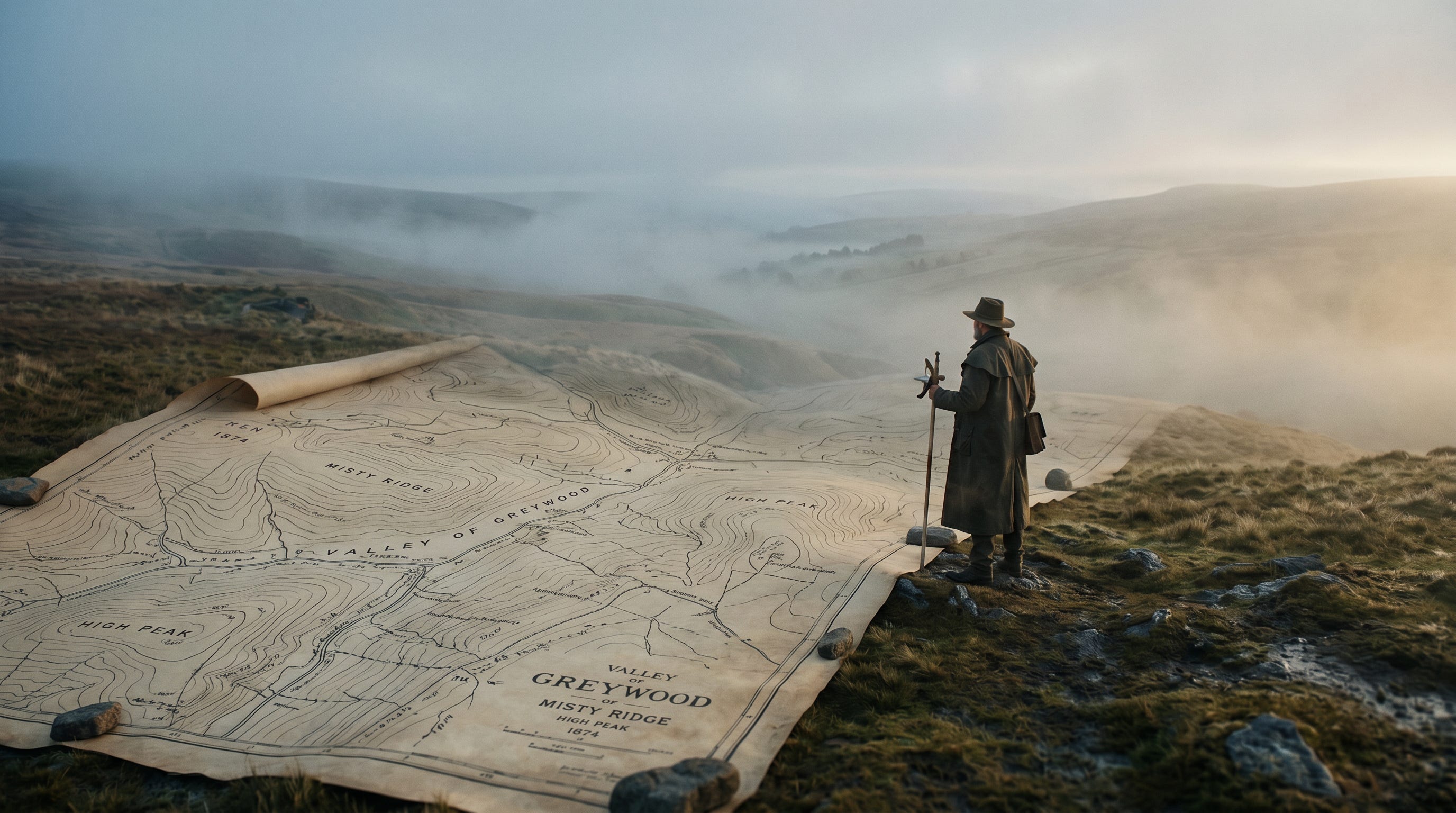
That fourth stage is what Baudrillard called hyperreality, and it comes with a line that has aged unnervingly well. The map, he said, no longer follows the territory. The map comes first. We build the model, and then we go looking for a world to match it.
His example was Disneyland: a place so obviously fake that it reassures everyone the rest of the country must be real, while the rest of the country runs on the same machinery of image and performance.
Now apply all of this to generative AI.
A language model produces fluent, confident, plausible text. It is not lying, because lying requires knowing the truth and choosing against it. Instead, it is operating at Baudrillard’s fourth stage. It generates the appearance of a knowing mind with no mind behind the appearance.
An AI image of a moment that never happened is the same illusion aimed at your eyes. The map of the event is there, but there never was any territory. In the Synthetic Age, the map gets there first.
The day a whole video call was fake
This all sounds academic until it turns up on a video call.
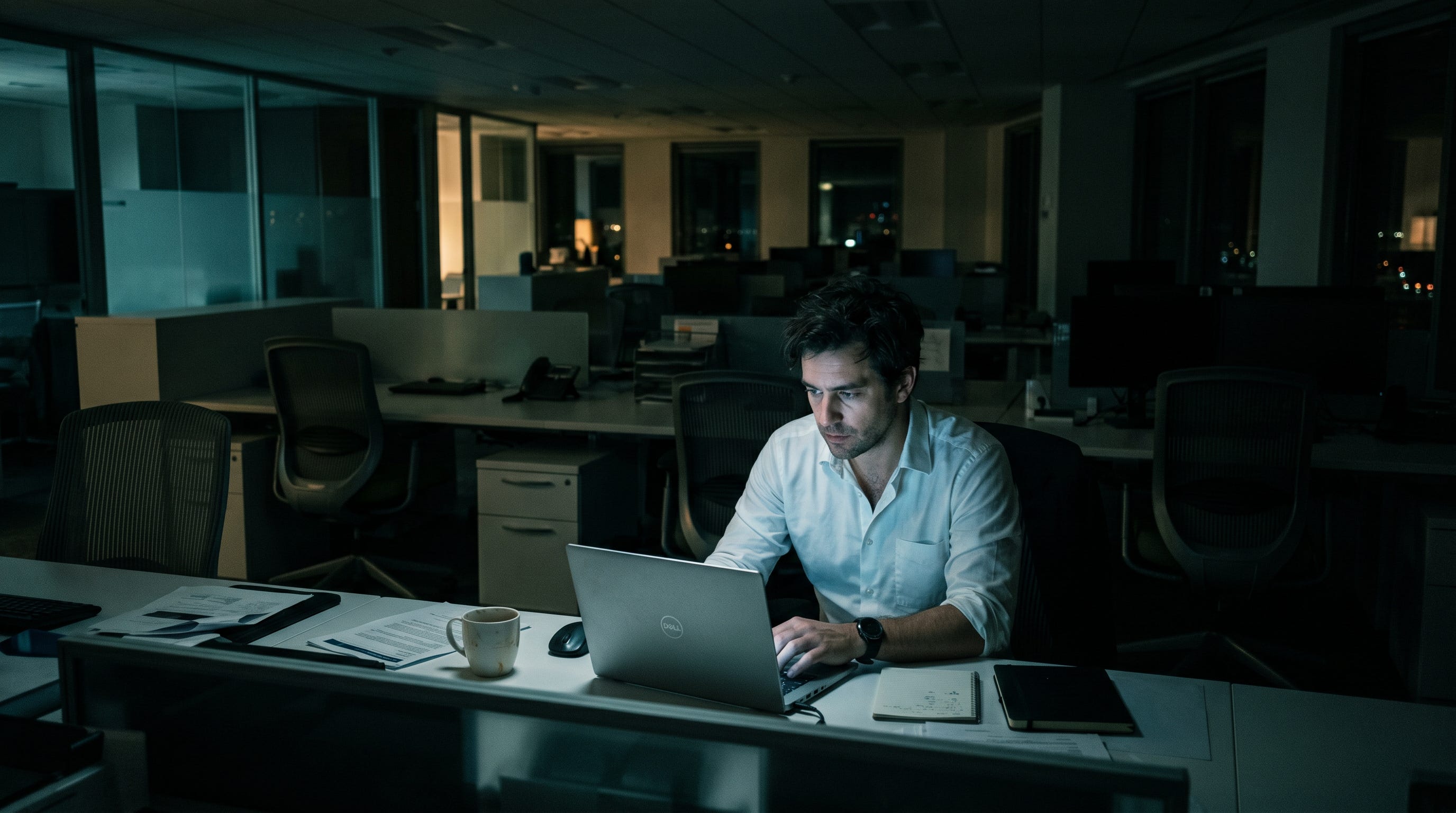
In early 2024, a finance employee at the Hong Kong office of the engineering firm Arup joined a video call. The chief financial officer was on it. So were several colleagues he recognized. They asked him to move money for a confidential deal. He had been suspicious of the email that set it up, but the call settled his nerves, because there they all were, on screen, talking to him.
He made fifteen transfers totaling about twenty-five million dollars. But every face on that call was a deepfake. Not one of those people had been in the meeting. The CFO had never asked for anything.
Revisit that again with Baudrillard in mind. The map of the meeting arrived before any meeting took place. The model of the CFO did the CFO’s job. By the time the actual head office was reached, the money was gone.
The dollar figure is what makes the Arup case famous, but the quieter damage is the one educators should take notice of. Once seeing and hearing can be faked this well, two things break at once. We stop trusting real evidence, and bad actors learn to wave away true recordings as probable fakes.
Legal scholars have a name for that second move: the liar’s dividend. The more forgeries there are, the more cover the genuinely guilty get. A real video of real wrongdoing becomes just one more thing someone can shrug off.
And it is not only fraud. The same machinery is busy manufacturing people.
Virtual influencers like Lil Miquela, a character built by a Los Angeles company and followed by millions, have been doing brand deals with fashion houses for years. Audiences form real attachments to a person who does not exist. The feeling is genuine. The object of it is a copy of nothing.
Let me make the case that I’m overreacting
I should push back on my own argument here. Any story that makes its teller sound like a prophet deserves suspicion, and this is one of those. After all, every new medium has been met with a prophecy that truth is ending. Regular readers know that I probably make this argument way too often, but I think it deserves repeating.
In Plato’s Phaedrus, Socrates worries that writing will hollow out memory and leave us with the appearance of wisdom in place of the real thing. Photography was going to kill painting and then kill our trust in images. Then Photoshop was going to end the credibility of the photograph decades ago.
But each time people adapted. They grew new instincts, new norms, new ways of checking. In hindsight, the panic looks overblown every single time.
There are real reasons to think this time is no different. Provenance standards that cryptographically sign a real photo at the moment of capture are being built into cameras and platforms. And there is also something a little too convenient about a warning that the world is drowning in synthetic content when it comes, in part, from creators who make their living inside the attention economy.
So maybe this is just one more moral panic with better production values. Maybe the students will be fine, the way every generation turns out to be more fluent in its own media than the adults around it feared.
I find that argument genuinely comforting. I just don’t think it holds up once you account for what is actually new.
Why the old panics don’t quite fit
Here is what the reassuring story leaves out.
Every earlier image, even a dishonest one, kept a thread back to something real. Walter Benjamin, writing in the 1930s about photography and film, said mechanical reproduction stripped away an artwork’s “aura,” its unique presence in one place at one time. But he was describing copies of real things.
A photograph, however staged or doctored, began with light that bounced off something that existed. You could, in principle, pull the thread back to the world. A faked photo was a lie about something real.
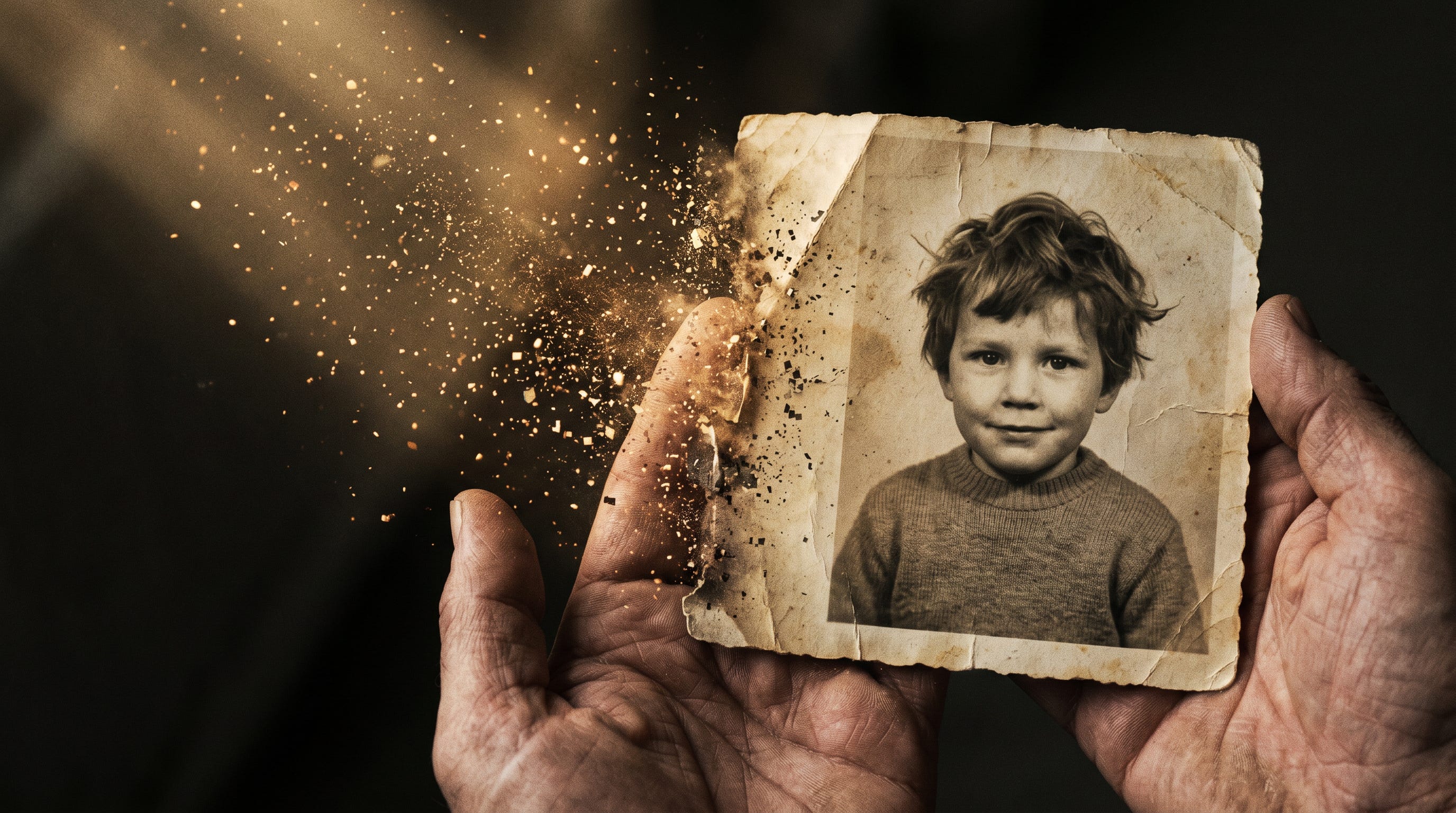
Synthetic media cuts the thread. There is no light, no subject, no original moment the image distorts. The AI picture of a childhood that never happened never passed through a camera. It came out of a math space. So it is not a distortion of the territory. It is a map with no territory under it, and it can feel warmer and more convincing than your actual memory.
New in kind? Maybe not. But it is new enough in degree that the old reassurance stops covering the case.
Then add the one thing the past panics did not have: scale and personalization. We are not all being shown the same fakes anymore. The system can generate a different reality for each person and feed it to them alone. The shared world that media literacy quietly assumed, the common set of images we could at least argue about, is the thing coming apart.
Which is why the standard classroom response is failing.
We taught students to spot fakes. Check the hands, look for the artifacts, cross-reference the sources. That was a contest of perception, and perception is the contest the machine is built to win. You cannot out-detect a system that improves faster than your checklist.
Reclaiming the human premium
If we cannot win on detection, we have to change what we are teaching students to do. What survives, in the language of those same conversations, is the human premium. The idea is simple.
Generative tools can carry out almost any task most of the way. They draft, summarize, render, and code to something like eighty percent. The last stretch, the judgment about whether the thing is true and right for this particular situation, is the part the machine cannot reach, because it has no stake in the world and does not care which answer is right.
That last stretch is the premium. It is where being a person still pays.
For educators, reclaiming it is first and foremost a conceptual shift, and it is an uncomfortable one. For a long time, our core job was moving information into students. The machine now does that instantly, sometimes falsely, and for free.
So the job changes. It moves from delivering knowledge toward building the capacity to know well when the evidence cannot be trusted. That means teaching metacognition out loud. How do I know what I know? What would change my mind? Who benefits if I believe this? It means treating verification as a practice and a relationship, not a glance at a screen.
In practice, this looks more ordinary than it sounds, and much of it is not about computers at all.
Families are already inventing offline codewords so that a cloned voice on the phone cannot impersonate a child in trouble. Security teams now ask a person on a video call to turn their head sharply, because live deepfake filters still smear at the edges. The lesson under those tricks is the one to teach.
When the image cannot be trusted, you confirm some other way. Through a real body, a real relationship, something the map cannot reach in advance.
We did not ban calculators. We stopped grading children on long division by hand and started asking harder questions that assumed the arithmetic. AI can be that, the tool that removes routine tasks, allowing students to focus on judgment, taste, and the messy human-shaped problems that have no clean answer.
However, this only works if we make sure the judgment stays with the student. Hand over the last twenty percent to AI, and there is no premium left to reclaim.
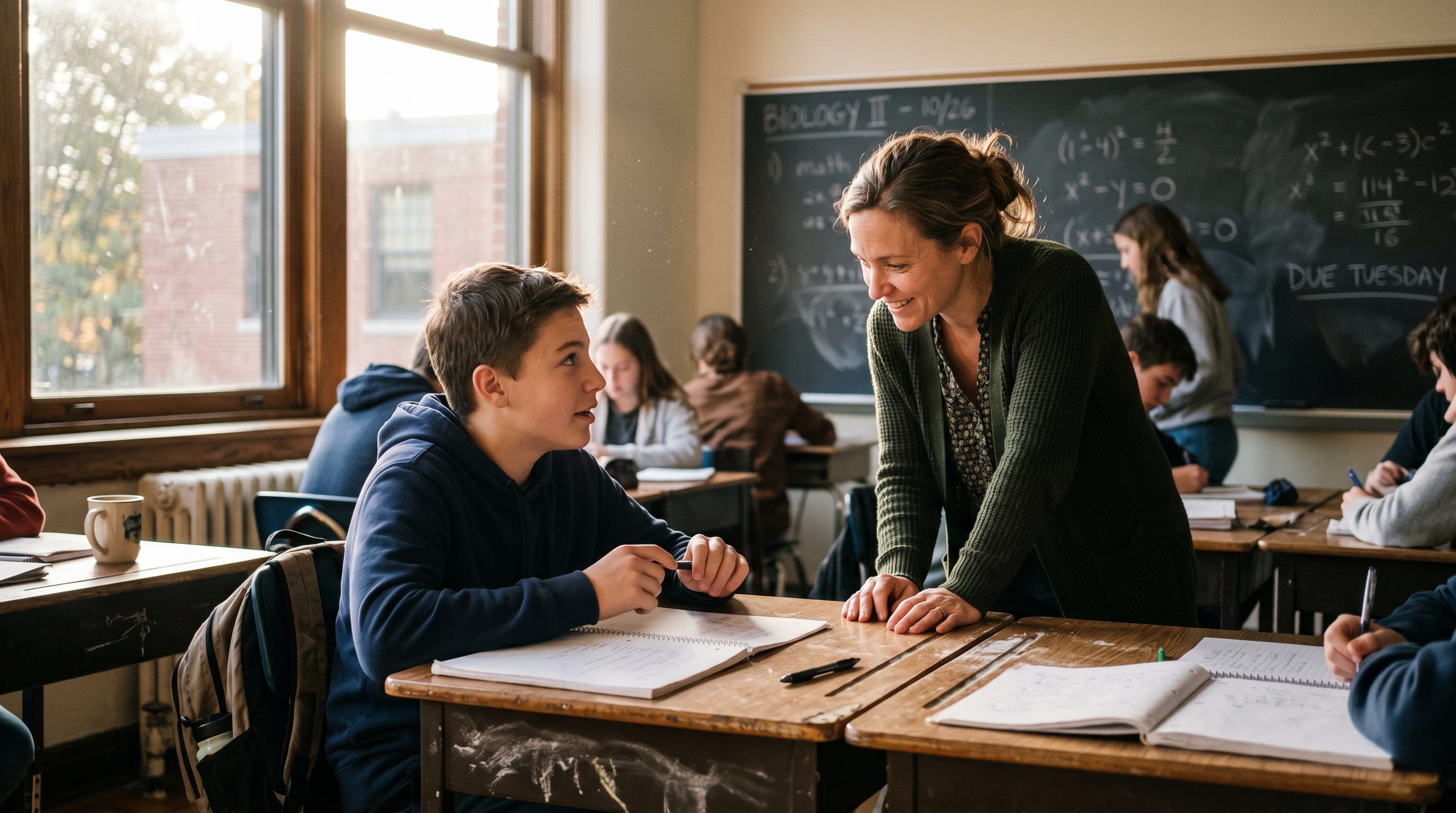
Which brings me back to the room the map is supposed to describe. The Synthetic Age is very good at producing the appearance of a knowing mind, a trusted face, a shared memory. It is a machine for making maps that arrive before any territory.
But the one territory it still cannot get to first is the live, accountable human in front of another human. A teacher in a classroom interacting in person with students is among the most precious things the Synthetic Age leaves us: a presence that cannot be generated on demand. We should protect it like the scarce resource it is about to become.
You can generate the lecture, the slides, even the face delivering them. You cannot generate the teacher who notices when a student goes quiet.
The images in this article were generated with Nano Banana 2.
P.S. I believe transparency builds the trust that AI detection systems fail to enforce. That’s why I’ve published an ethics and AI disclosure statement, which outlines how I integrate AI tools into my intellectual work.