

Somewhere in the last couple of weeks, I lost track of which AI model launched when. There was a new video generator, then another one, a frontier text model with a decimal-point version number, and image models that leapfrogged each other before anyone had finished writing the comparison post. I can no longer tell you, without checking, which one came out first. I know that whatever came last is supposed to be better than what came before, because the benchmark line always goes up. But that does not seem to matter as much anymore.
Call it model fatigue. The release cadence has outrun our ability to follow it.
One launch out of that blur, however, deserves more attention than the rest. On September 9, 2026, Suno shipped its v6 family of music models. The audio it generates is impressive, but what interests me more is where the model came from and what it represents. As far as I can tell, Suno v6 is the first major creative model released under a public licensing framework negotiated with companies that control rights in the music. That does not settle every argument about generative music. It does, however, remove the most immediate provenance objection and shift the others into new territory.
And for those of us who teach, there is another, maybe even harder, problem behind the legal one. What justification remains for making something yourself once the provenance objection and the obvious AI tells both recede into the background?
In today’s post, I want to trace how a copyright lawsuit turned into a training license, separate what is known about the data behind v6 from what is still opaque, describe what the model sounds like now, and then ask what we should tell students once provenance and technical flaws are no longer enough to dismiss the output.
How a lawsuit turned into a license
The story starts on June 24, 2024, when Sony, Universal, and Warner sued Suno in federal court in Massachusetts. The Recording Industry Association of America coordinated the case. The complaint alleged that Suno had copied copyrighted recordings at scale, without permission, to train its models.
The evidence was unusually concrete for a case of this kind. In tests of Suno’s output, the labels found producer tags—the spoken audio watermarks commercial producers stamp on their beats—embedded in generated tracks. A tag like “CashMoneyAP” would be difficult to explain unless unedited commercial recordings had entered the training data. The labels also documented outputs that closely tracked specific songs, from Chuck Berry’s “Johnny B. Goode” to Mariah Carey’s “All I Want for Christmas Is You,” along with synthetic vocals that sounded a great deal like Bruce Springsteen and ABBA.
Suno’s defense was the one pretty much every generative AI company has used at this point: fair use under 17 U.S.C. § 107. The argument is that a model does not copy protected expression in order to redistribute it. Instead, it extracts statistical relationships between chord progressions, rhythms, and timbres, and then generates something new. And this is roughly what a human musician also does by listening to a lot of records.
I have some sympathy for the fair-use argument as a matter of principle, and I have written before about how the “it’s just like a human learning” analogy fits what these systems actually do. However, given what was at stake, it always seemed unlikely that the fair-use question would reach a definitive judgment. Statutory damages for willful infringement run up to $150,000 per registered work. The labels that are still suing have since identified more than 60,000 recordings, creating potential legal exposure in the billions.
The way Suno got its training audio made the legal risk worse. In May 2025, Suno told the labels in discovery that it had downloaded audio from YouTube with open-source tools, including yt-dlp. That September, the labels asked the court for permission to add a separate claim under the DMCA’s anti-circumvention provision, 17 U.S.C. § 1201, arguing that those tools circumvented YouTube’s technical protections. A fair-use argument would not by itself resolve that claim.
It is therefore not surprising that on November 25, 2025, Warner Music Group settled with Suno and announced what both sides called a partnership. The settlement agreement itself has never been made public, so what follows comes from the two companies’ announcements and from press reporting.
Warner licensed Suno to build new models with recordings and compositions it controls. While the exact financial terms were not disclosed, Suno says a share of its revenue now goes to its licensing partners. Artists and songwriters signed to Warner must opt in before Suno can use their names, images, likenesses, or voices in its features. And a recognizable vocal clone of a Warner artist may appear only with that artist’s approval.
The partnership also came with product restrictions. Suno agreed to retire its v3, v4, and v5 models, the ones trained on scraped data, once a licensed replacement was ready. Free-tier users lost the ability to download audio at all, and paid users got monthly export caps. Both measures were intended to curb the flood of AI tracks onto streaming services and the resulting dilution of the royalty pool. And in a piece of the deal that reads more like an acquisition than a settlement, Suno took over Songkick, Warner’s concert-discovery platform, along with behavioral data on its millions of registered users.
Those terms materialized in the v6 launch. The download restrictions are now live, and the old models are being retired as v6 rolls out. The model itself appears to be the core deliverable of the partnership.
What is actually in the box
Suno describes v6 as a family. The flagship v6 is aimed at paying subscribers and tuned for predictable, polished results. A sibling called v6-wild loosens the constraints for producers who want stranger textures, and a distilled v6-mini powers the free tier, where you can generate and stream but not download. All of them accept more than text. You can hand v6 a video clip, a still image, or a voice memo, and it will generate a score for it, matching cuts, mood, and pacing. It also supports localized edits, such as rewriting a chorus while leaving everything else unchanged.
The public account identifies several sources of licensed training data. Warner-licensed material appears to form the base. BMG added its own catalog of more than a million recordings under a deal signed in August 2026 that also resolved BMG’s past-use complaints. Additionally, Believe and its distribution arm, TuneCore, signed a separate agreement with Suno in September 2026, adding independent and non-Western repertoire that is less prominent in the major-label catalogs.
Suno’s chief product officer, Jack Brody, told Rolling Stone that v6 was “trained from the ground up” on licensed partner and user data, and called it the first model developed directly alongside the industry.
That is the clean story. Here is where it gets murkier.
The clean account comes from executive interviews. The launch documents are more careful. Suno’s own launch post, at nearly a thousand words, does not contain the word “trained,” and neither does Warner’s press release. One close reading of the primary documents counted all five announcement texts from Suno and Warner and found no use of the word “train” across roughly 3,500 words. The verb the companies use instead is “developed with.”
Billboard reported that Warner licensed only a subset of its catalog for v6, with Suno responsible for clearing any additional rights needed for those works. The publication also read Suno’s careful wording as a product of the fact that Universal and Sony’s lawyers are still litigating this exact question. And Rolling Stone reported that Warner would not say how large the licensed catalog was or whether its artists had a chance to opt out. When Brody was pressed on the point, he framed the Warner deal as being about building future products rather than about licensing data for models.
That is a strange thing to say about a deal whose main public feature was the licensing of data for generative model training.
Suno’s CEO, Mikey Shulman, was clearer about what was not included in the training data. Asked directly on Billboard On the Record whether the v6 training set contained recordings from Universal, Sony, or Kobalt, he said that it did not and that no unlicensed partner data had been used. Because that claim is both specific and legally consequential, I give it more weight than the companies’ broader marketing language. It remains a claim, however, rather than an independently verified fact.
The online argument, meanwhile, has split roughly along two lines. Skeptics—and there are many in music-production forums and on the Suno subreddit—read “developed with” as a hedge. They point out that a model “trained from the ground up” could still reuse components from the old system. Reusing an architecture carries no training data with it, but reusing a trained tokenizer or audio encoder might retain traces of that data. I have yet to see a satisfactory answer.
Many working producers, on the other hand, seem simply to have moved on. The materials used for training are covered by agreements, the old models are on their way out, and the tool is better. From that perspective, the provenance dispute looks as if it has been settled by contract, whatever the precise wording of the public announcements.
My position is closer to the second camp, but not all the way. Warner’s official language described the models as “licensed” rather than “fully licensed.” That gap is probably lawyer-driven caution rather than a smoking gun. The very fact that we are parsing adjectives in a press release tells us something. Two years ago, the question about a music model’s training data was whether anyone would ever find out its provenance. Now it is whether the license covered the entire catalog or only a subset. That is a completely different kind of dispute.
When the tells are gone
None of this would matter as much if v6 still sounded like a machine. But it no longer does. I have spent the past few days with v6 and v6-wild, and most of the AI tells I had learned to recognize seem to be gone. To my ears, the earlier Suno models had a very specific sheen. There was a layer of high-frequency noise over everything, a faint hiss that sat on top of the mix regardless of genre. I had assumed it was a by-product of the generation process. Once you heard it, you could not stop hearing it. It was my most reliable way of identifying a Suno track.
I can no longer hear that sheen. The v6 output sounds a lot cleaner, and the top end sounds much closer to a finished master than to a generative render. Whether that is the licensed data, a new architecture, or a different final processing stage, I have no way of knowing. But the artifact I relied on is gone.
When I test a music model, I usually try to push it out of its comfort zone. This time, I asked Suno for a six-minute French existential synth-pop track crossed with traditional Middle Eastern music. The result was Poussière d’être, with lyrics originally generated by Claude Fable 5.1 and then shortened and simplified by Suno’s internal lyrics model to fit the requested length. The genre combination may not be everyone’s cup of tea, but taste is beside the point. Judged on sound alone—the vocals, instrumentation, arrangement, mix, and overall finish—it is extraordinarily difficult to distinguish from a conventionally produced studio track.
I have embedded the track below so you can hear what I mean. I did not apply any post-processing; this is the track exactly as Suno generated it.
Music is catching up with the other modalities here. Across text, image, and video, the most obvious technical tells have been disappearing for a while. Music had remained easier for me to identify by ear. Suno v6 now narrows that gap while adding something most other major models lack: a public licensing framework. Most of the big text, image, and video models were trained on data their developers did not license, under a fair-use theory that courts have not yet resolved in the pending cases.
The closest thing on the text side is the $1.5 billion settlement Anthropic reached with book authors in 2025, and that only paid for pirated copies acquired in the past. It licensed nothing going forward. With Suno v6, by contrast, the license came first. Retiring the scraped models was a condition of the agreement, and v6 shipped under an arrangement in which participating rights holders receive ongoing payments.
What a license cannot settle
I need to acknowledge that “licensed” is not the same as “ethically resolved,” and that it is not even the same as “legally settled.” The Warner deal resolved the copyright claims of one major-label group. Universal and Sony are still in court in Boston.
The court allowed the stream-ripping claim to proceed in August 2026, and on September 1 Suno admitted in its answer that training audio had been obtained from YouTube using yt-dlp, while disputing the labels’ standing to bring the claim. Seventeen days later, the labels filed a second suit covering 60,202 further recordings—one that takes direct aim at v6, arguing it was built from the output of the earlier, unlicensed models and is therefore “the fruit of the same poisoned tree.”
And then there is a labor dispute. The American Federation of Musicians sued Universal, Warner Records, and Atlantic in June 2026. The union argues that licensing recordings for AI training is a “new use” under its collective bargaining agreement, and that a new use triggers notice to the union and supplemental payment to the session players who performed on those tracks.
Similarly, there is an open question about identity rights. On August 31, 2026, Jason Isbell, David Lowery, and two other musicians filed a class action against Suno that sidesteps copyright and relies instead on right-of-publicity and biometric-privacy law. Its theory is that a musician’s identity belongs to the musician, so a label may be able to license a master recording without being able to license the singer’s voiceprint.
So the ethical argument continues on new ground. The money under these agreements flows to rights holders—often labels, publishers, and distributors—not necessarily to the people who played or sang. A label may own or control the master. Whether that control also gives it the right to license a session player’s performance for a new use, or a singer’s identity for imitation, is what the AFM and Isbell suits will test.
If the courts distinguish ownership of the recording from rights in the identities captured in it, labels could not authorize uses of those identities without the musicians’ consent. The result would be broader protection than anything at issue in the original copyright lawsuit.
What we tell students next
As the most straightforward provenance objections and the obvious AI tells fade into the background, a tougher problem remains. For many critics of generative AI, and I include myself at times, provenance has worked as an escape hatch. However good the outputs got, we could say the models were built on unlicensed work, and that objection did a lot of moral lifting. It let us treat quality as secondary, because the tool was compromised to begin with.
That escape hatch is closing. There is now a music model that sounds very good and operates under agreements that pay participating rights holders. I expect image and video companies to follow, using the Warner deal as a template. Before long, most creative modalities are likely to have at least one model that is both difficult to distinguish from human work and covered by a licensing agreement.
And then what? If licensed models can write a competent essay, render a photorealistic image, generate a convincing thirty-second clip, and now produce a song that does not sound AI-generated, the argument for human creative work has to rest on something other than training-data provenance or the machines’ flaws.
One candidate is that creative work has always been partly about the relationship between the maker and the audience. The Songkick integration, which funnels listeners toward live shows, can be read as an acknowledgment of that. Suno’s own business plan now seems to assume that people want to be in a room with the person who made the song.
For those of us in classrooms, the practical version is a lot simpler but also a lot more uncomfortable. I have told students for years that a moment would come when AI-generated and human-made work could no longer be reliably told apart, and that we should plan for it rather than hope it will never come. That moment seems to have arrived. Now I need to explain why making something yourself remains worth doing when a licensed, polished alternative is just one prompt away.
To be honest, I do not yet have a complete answer. I believe it has less to do with the finished song than with what making the song does to the person who makes it. Students write, compose, draw, and build to develop judgment, technique, patience, taste, and the ability to turn their own ideas into form. A student who prompts a song gets the song. A student who writes one spends weeks getting it wrong and working out why—and develops a skill they did not have before along the way.
In the end, the participating rights holders won licensing revenue, Suno won a future, and the session players and singers are still in court over who had the right to sell what. The rest of us got songs that sound like finished records from a model with a legally sound paper trail.
Model fatigue is real. But this one is worth waking up for.
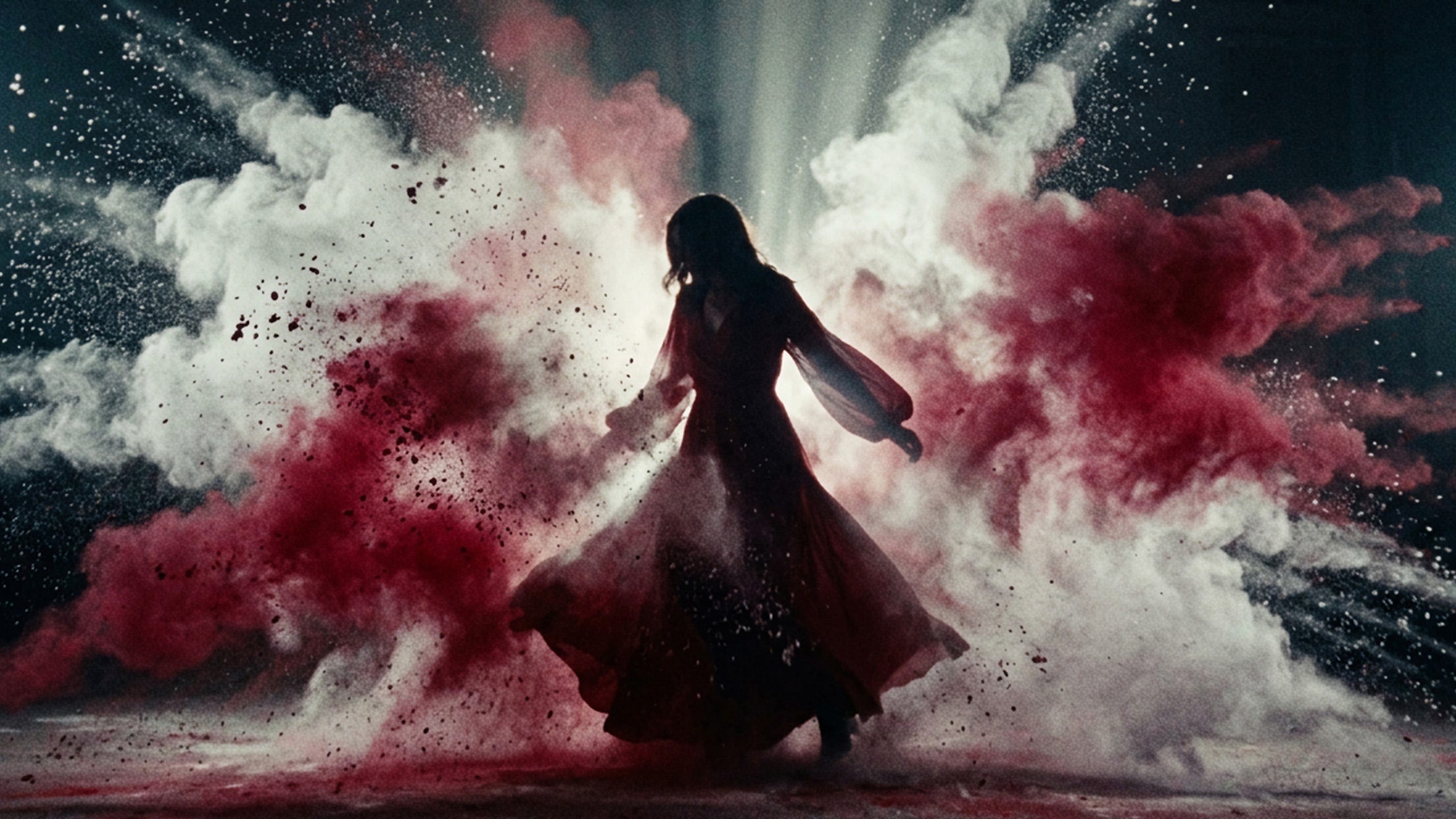
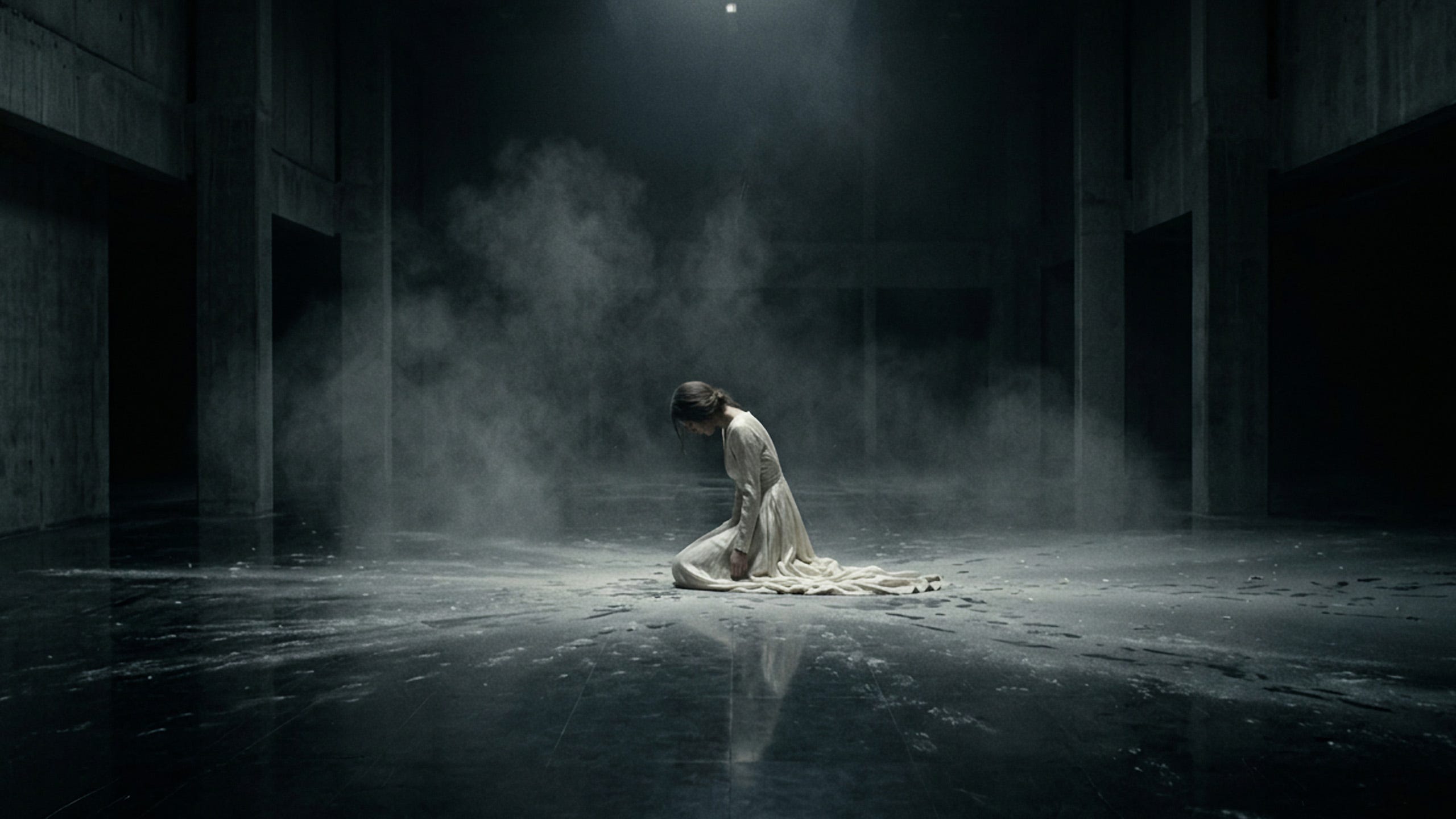
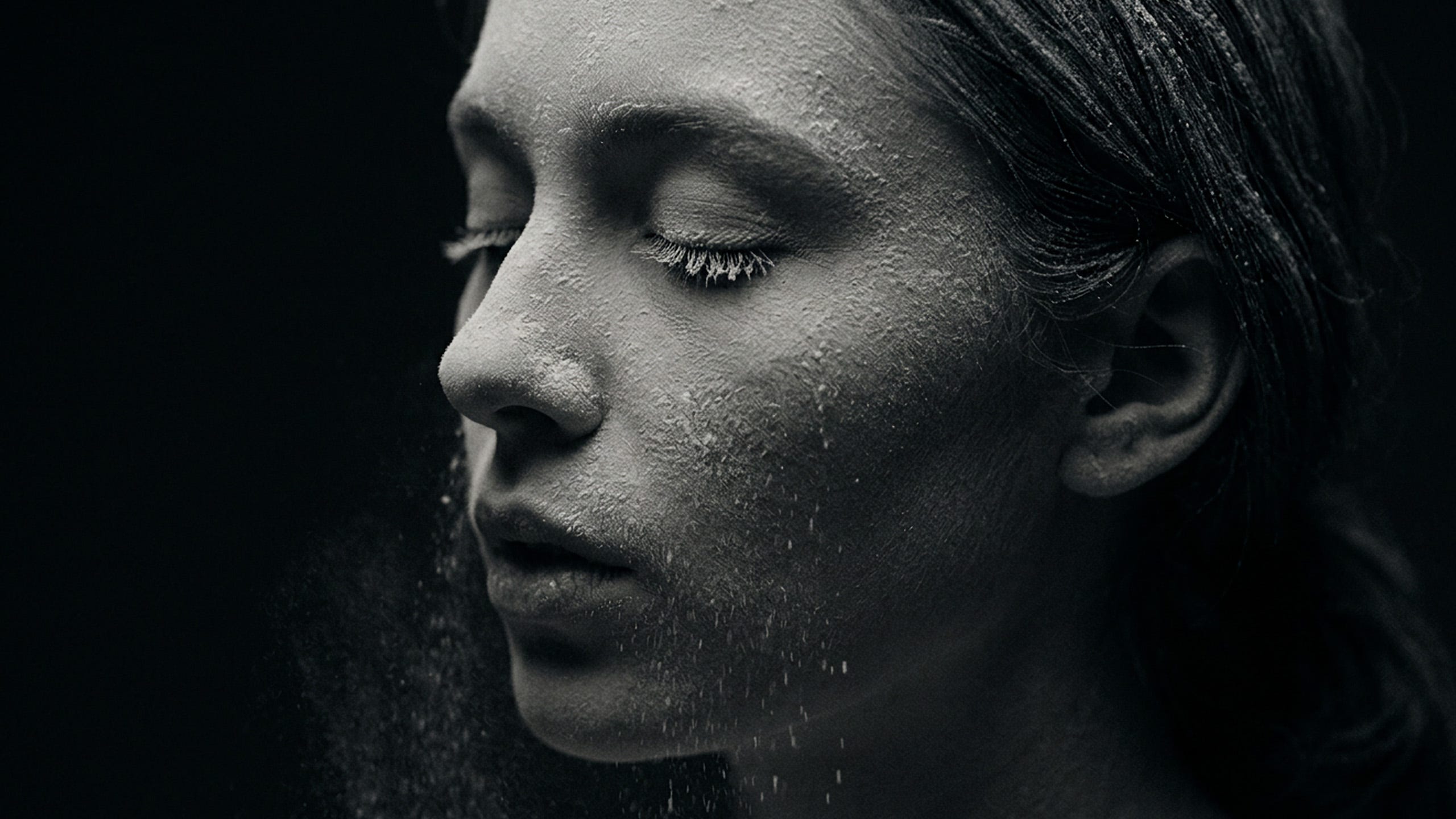
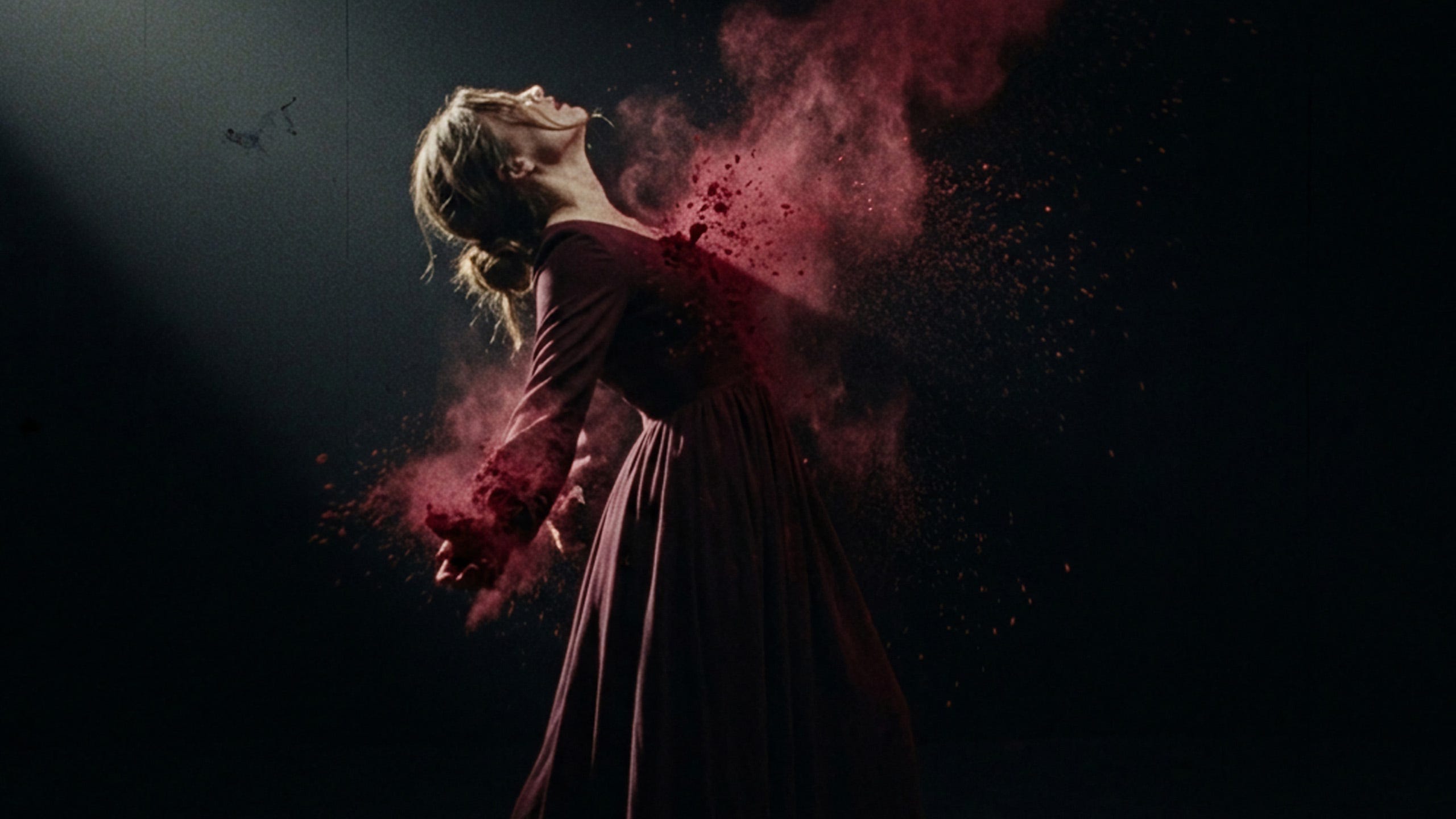
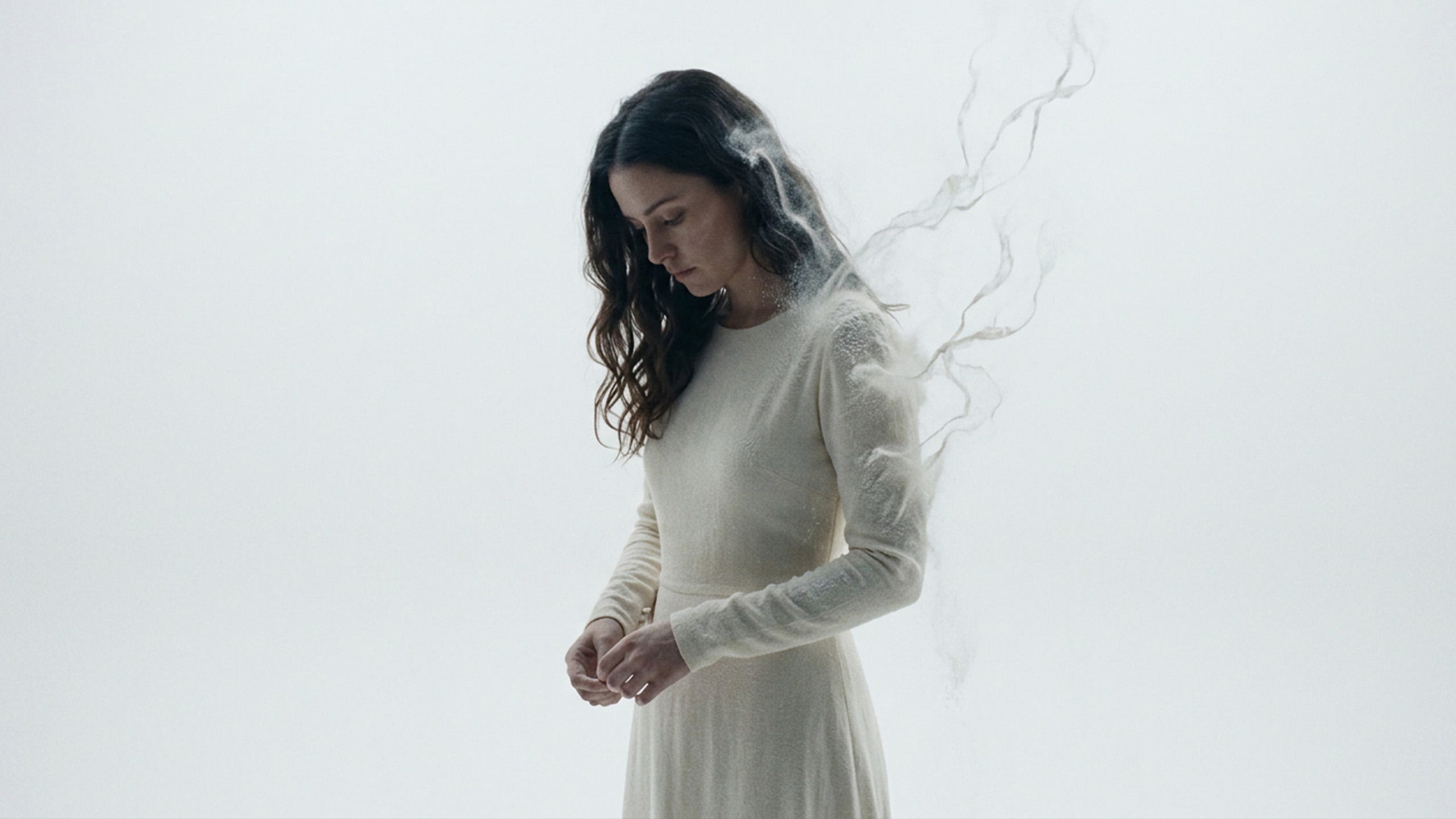
The images in this article are concept art for a planned music video for Poussière d’être. They were generated with Nano Banana 2 based on a story developed with the assistance of Claude Opus 5.
P.S. I believe transparency builds the trust that AI detection systems fail to enforce. That’s why I’ve published an ethics and AI disclosure statement, which outlines how I integrate AI tools into my intellectual work.
It's a cesspool of rights infringements. Maybe the tools had to exist first to get the attention of publishers, record labels and studios to force deals to be made but in a perfect world, a developer of a tool would approach the owners of the works it wishes to use first, like everyone else has had to for whatever they wanted to do for as long as we've had copyright law.